
New Haven Gun Violence Problem Analysis
In furtherance of our research agenda, CTOP has been providing capacity building support to Connecticut municipalities to analyze gun violence data in support of strengthening their Offices of Violence Prevention (OVPs) and creating operational plans to reduce the gun violence that impacts CTOP’s target population in their cities. This section highlights New Haven’s analysis, which is furthest along to date. 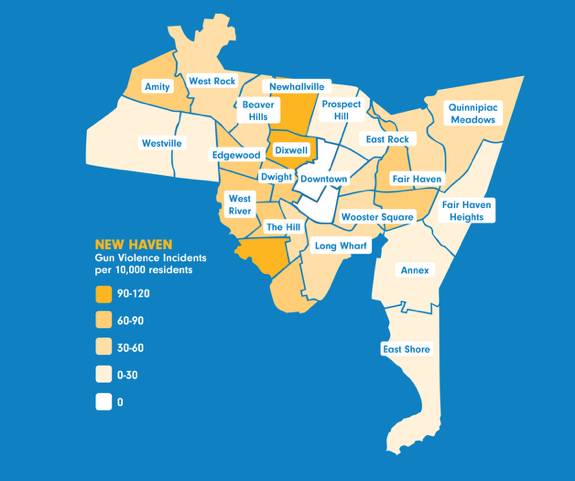
With technical assistance from Boston Consulting Group (BCG), CTOP worked with the City of New Haven to conduct a gun violence problem analysis using data from the New Haven Police Department from 2019 to 2024. To support the development of Connecticut’s first municipal OVP, this analysis, alongside city-wide ecosystem mapping and a benchmarking study of high-functioning OVPs nationwide, will help New Haven improve its community violence intervention infrastructure. This improved system will aid New Haven’s OVP with implementing programs that can drive down community violence and make the Elm City’s young people safer. To maintain this progress into the future, New Haven is using the data and tools developed with BCG to create a five-year strategic plan that will enable the city to provide more effective services, enhance collaboration with community based organizations and City stakeholders, and expand the utilization of data for decision making to better support victims of gun violence, prevent individuals from using firearms to harm others, and reduce recidivism across high-risk populations.
Additionally, the research team presented to the New Haven Community Advisory Board on multiple occasions to gather their input and feedback, since any quantitative analysis is only as meaningful as its ability to represent the lived experiences of residents of New Haven.
Based on the data, several key trends emerged:
- Despite making up only 4% of Connecticut’s population, New Haven accounted for 20% of the state’s firearm homicides and 25% of Connecticut’s nonfatal shootings.
- Gun violence peaks in the summer months, particularly among young people. 46% of teenage-involved incidents occurred between May and August.
- In 2024, 49% of victims of gun violence were under 24 years old, which is an increase year over year.
- Neighborhoods with more gun violence experience worse social determinants of health including lower median incomes, higher suspension and chronic absenteeism rates, lower likelihood of graduation, reduced life expectancy, lower access to health insurance, and reduced sleep.
As a result of this analysis, the City of New Haven and the New Haven Police Department committed to these recommendations:
- Provide supports like housing, mental health, childcare, employment, education, and basic needs to victims of gun violence by expanding the Victim Services Support Network.
- Increase life coaching and use of credible messengers for young people at risk of gun violence.
- Provide reentry preparation for currently incarcerated individuals and increase employment and housing services for those returning from incarceration at risk for gun violence.
- Partner with local and state agencies to ensure data collection and sharing is aligned with the New Haven Community and OVP needs.
Read the full report on the New Haven Office of Violence Prevention website.