
COMPASS Youth Collaborative
COMPASS Youth Collaborative interrupts violence in the City of Hartford by building transformative relationships with youth at the center of the violence. COMPASS Peacebuilders provide youth the tools to create sustained behavior change and transition successfully to adulthood.
 When a gunshot victim opens their eyes in one of Hartford’s three hospitals, they will most likely see Larry “Love” Johnson at their bedside. Larry is the Director of Crisis and Hospital Response at COMPASS Youth Collaborative, where he and his team respond 24 hours a day to support young victims of violent crimes in the emergency room. The immediate aftermath is the most critical window of time to improve outcomes for victims and reduce retaliation within the community.
Larry and his team act as liaisons between the victim, their family, and hospital staff to ensure trauma-informed care during the most challenging moments of a survivor’s life. He says, “Immediately after the hospital calls, we’re inside the emergency department, meeting with the family that’s gathered at the hospital, with the hospital staff – guards, nurses, surgeons – to build a plan with them as far as how to support that person that’s inside the emergency department. We’re also watching the crowd for anything that could be heightened, outside in the emergency department parking lot.”
COMPASS’s peaceful presence at the hospital deescalates the crowd to mitigate the possibility of retaliation, interrupting the spread of violence and keeping Hartford safer. But, as Larry puts it, his primary job in these moments is “doing the best I can to keep you calm as you’re being treated inside the hospital, being present, and advocating for you.”
His work doesn’t stop at a young person’s bedside. Within 24 hours of the shooting, Larry and his team meet with the City of Hartford, Hartford Public Schools, and other key city stakeholders to gather information about who the victim is, what their needs are, and whether anyone else is at risk. With that knowledge, the COMPASS team creates a tailored plan to support the survivor’s basic needs like clean clothes, food, utilities, and a functional lock on the door, as well as inform any further de-escalation work they may need to do in the community.
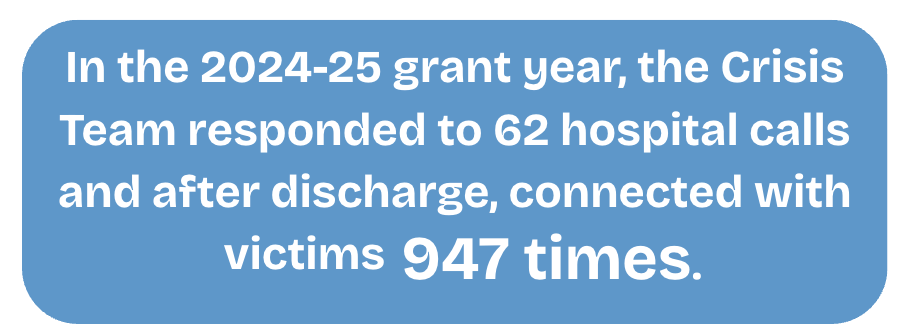 They also partner with UConn Family Medicine to conduct follow-up wellness visits, assisting with wound care and bandage changes to support healing. In the months that follow, Larry and his team continue to meet regularly with the survivor to meet basic needs, build nonviolent coping skills, and offer mental health support. If the young person is in the age range that COMPASS serves and high enough risk, COMPASS enrolls the young person in the COMPASS Peacebuilder Program.
Ultimately, Larry says, “I wanna do all I can to help you, keep you safe, and help you get well and be with you so that at some point in time, you’ll turn around and give that back to our community.”