
Forge City Works
Forge City Works serves people in the Hartford community who have barriers to employment by providing job training in the food and hospitality industry to help them achieve sustainable careers.
 “Work can be stressful, especially for our trainees who either have not had a job before, or have never really been able to keep one,” says Logan Carruba, Lead Case Manager at Forge City Works in Hartford. As part of their job training program, he coaches and supports trainees with navigating the barriers they face in life while managing the stresses of work as they progress through a program that is designed to increasingly mirror a real-world job experience.
“They didn’t have people to tell them how to act at a job. All those like unspoken rules, like how to communicate with your coworkers, what to say, what not to say…that’s where my classes and one-on-one case management meetings come in.”
Logan teaches classes on soft skills and cognitive behavioral techniques and provides coaching in the application of those skills as young people progress through the Forge City Works program, helping them to improve their reliability, communication, and teamwork as well as strengthen their emotional regulation to appropriately respond to pressure and demands in the workplace.
During case management, he “provides [trainees] with the space and the opportunity to talk and go over things. And I think it helps that I’m their teacher and I’m the person that’s with them at the beginning stages, but I’m not their trainer and I’m not their boss over there at the restaurant…I’m one step removed, so it’s a safe space to be able to talk to someone who knows about the places they’re working and the people that they’re working with.”
Trainees are also learning essential culinary competencies through kitchen labs – safety and sanitation, knife cuts, baking, roasting, sautéing, and more – before they move to shadow shifts and then internships at one of Forge City Works’ culinary social enterprises.
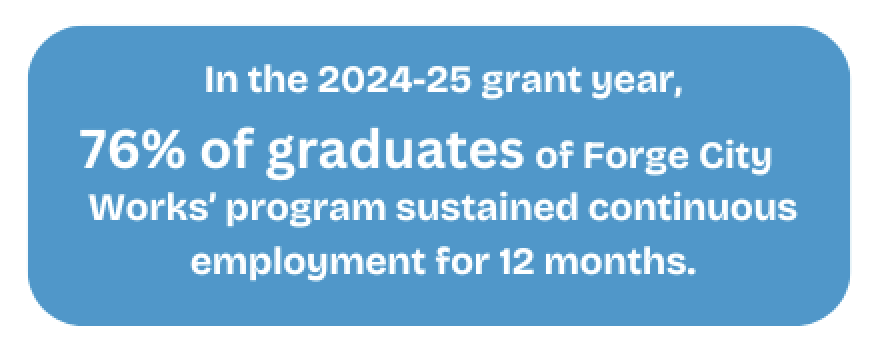 “Because of the soft skills we teach, our program is more than just a job. It helps [trainees] learn useful skills, language, and tools they might not have heard before,” Logan explains. “We are a learning environment and a work setting in the same space and they get paid for it all. They can learn something then that same day or next week go onto shift and practice it at the same time.”
As Logan reflects on his work with trainees at Forge City Works, he says, “I’ve seen people overcome their struggles and conquer their goals. They get jobs and, more importantly, start on career paths that they love.”